Vest-Type Weight Redistribution for Long-Term Head-Mounted Display Use
Problem: Immersive HMDs increase physical burden, reducing mobility and long-term usability.
Solution: A vest-based system that redistributes HMD weight to the torso, reducing strain while maintaining natural head movement.
Background
HMDs are evolving in two directions
- Fully immersive → high presence (VR, Vision Pro)
- See-through → everyday usability (AR glasses)
- Higher immersion requires more hardware

Fig. 1. Fully immersive vs see-through HMD
The paradox of higher immersion
- More hardware → increased weight
- Increased weight → greater physical burden
- Physical burden → reduced immersion

Fig. 2. Immersive HMD paradox
Physical burden limits user experience
- Facial and neck (cervical) strain
- Restricted head movement
- Reduced long-term usability → decreased immersion

Fig. 3. Physical burden of immersive HMD
" Prolonged HMD use → Cervical & facial strain → Reduced immersion "
Goal
" Sustain immersion by reducing physical strain and preserving mobility "
Solutions
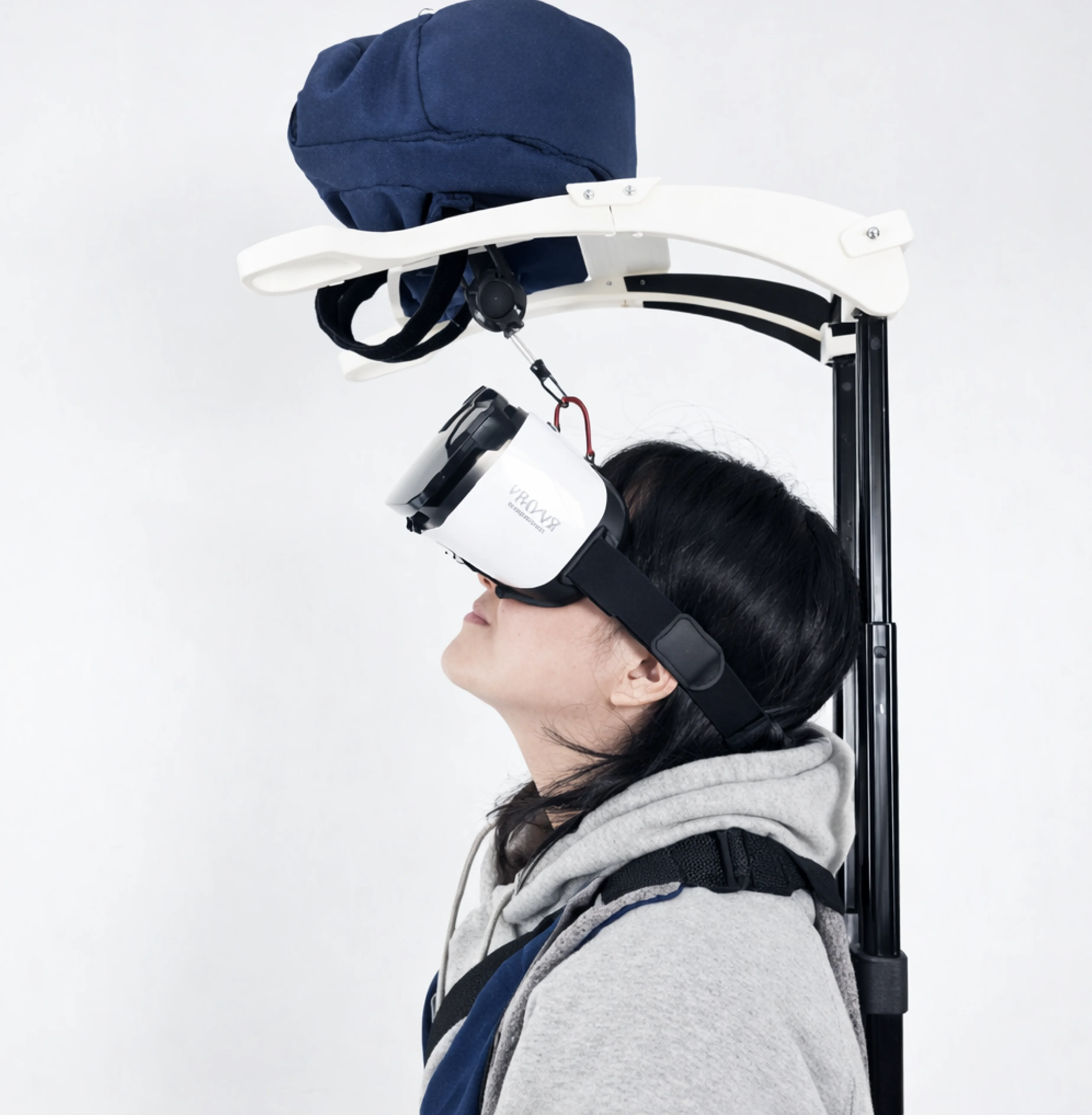
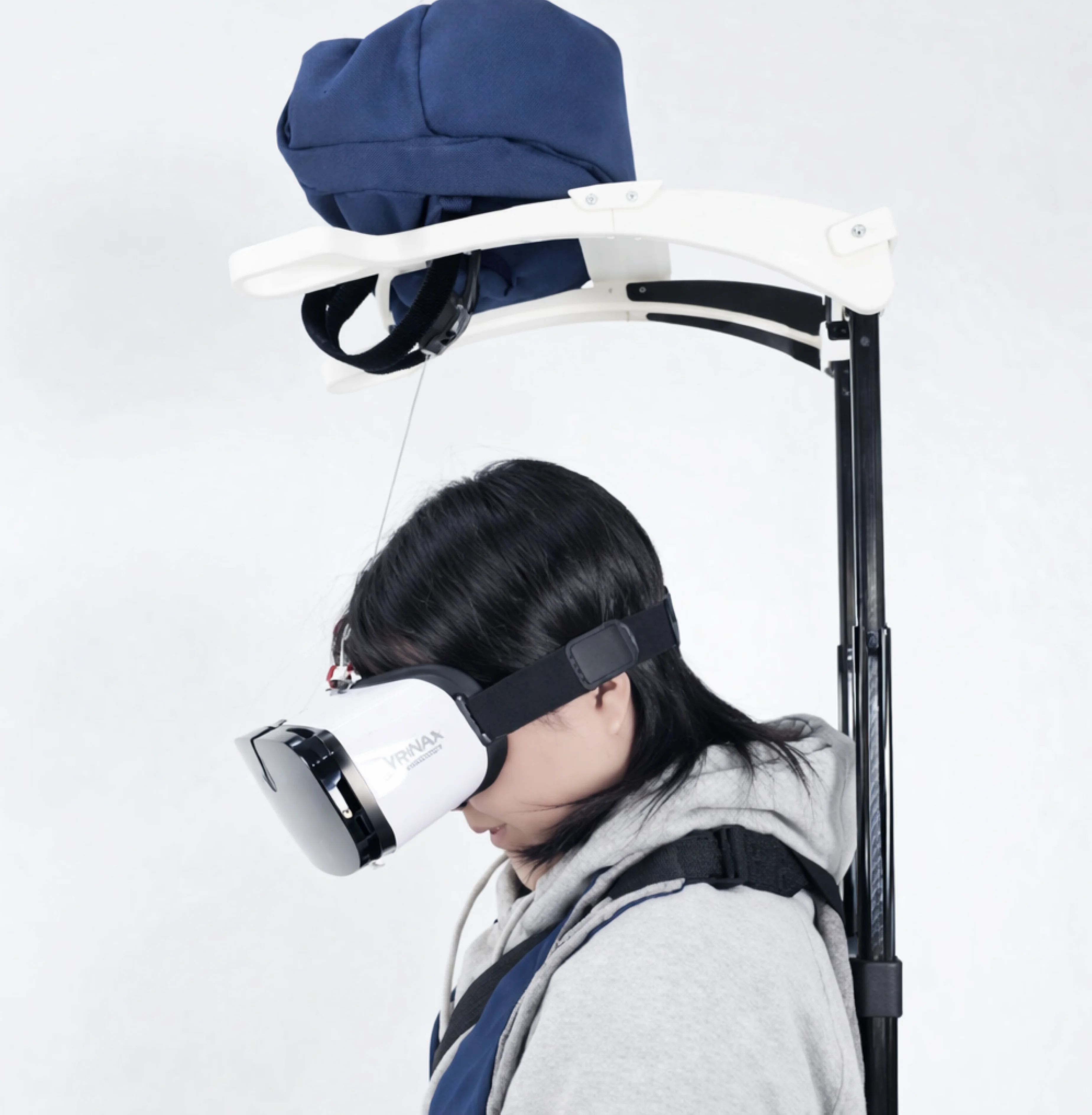
Wire + Vest Structure (Weight Redistribution)
Reduces cervical and facial strain

Fig. 4. HMD weight redistribution method
- ① Wire support: lifting the HMD → reducing facial pressure
- ② Vest frame: transferring load to the shoulders and torso → reducing neck strain
- ③ Spring linkage: following natural neck motion → minimizing interference
Universal Structure (Mobility Preservation)
Preserves natural movement and usability

Fig. 5. Internal structure and adjustable frame
- ① Handles: enabling easy portability
- ② Thoracic plates: providing upper–mid back support
- ③ Adjustable frame (200–600 mm): adapting to different body sizes
Results
User Scenario
- Wear the vest
- Adjust the support structure to fit body size
- Unfold and position the VR support
- Put on the HMD

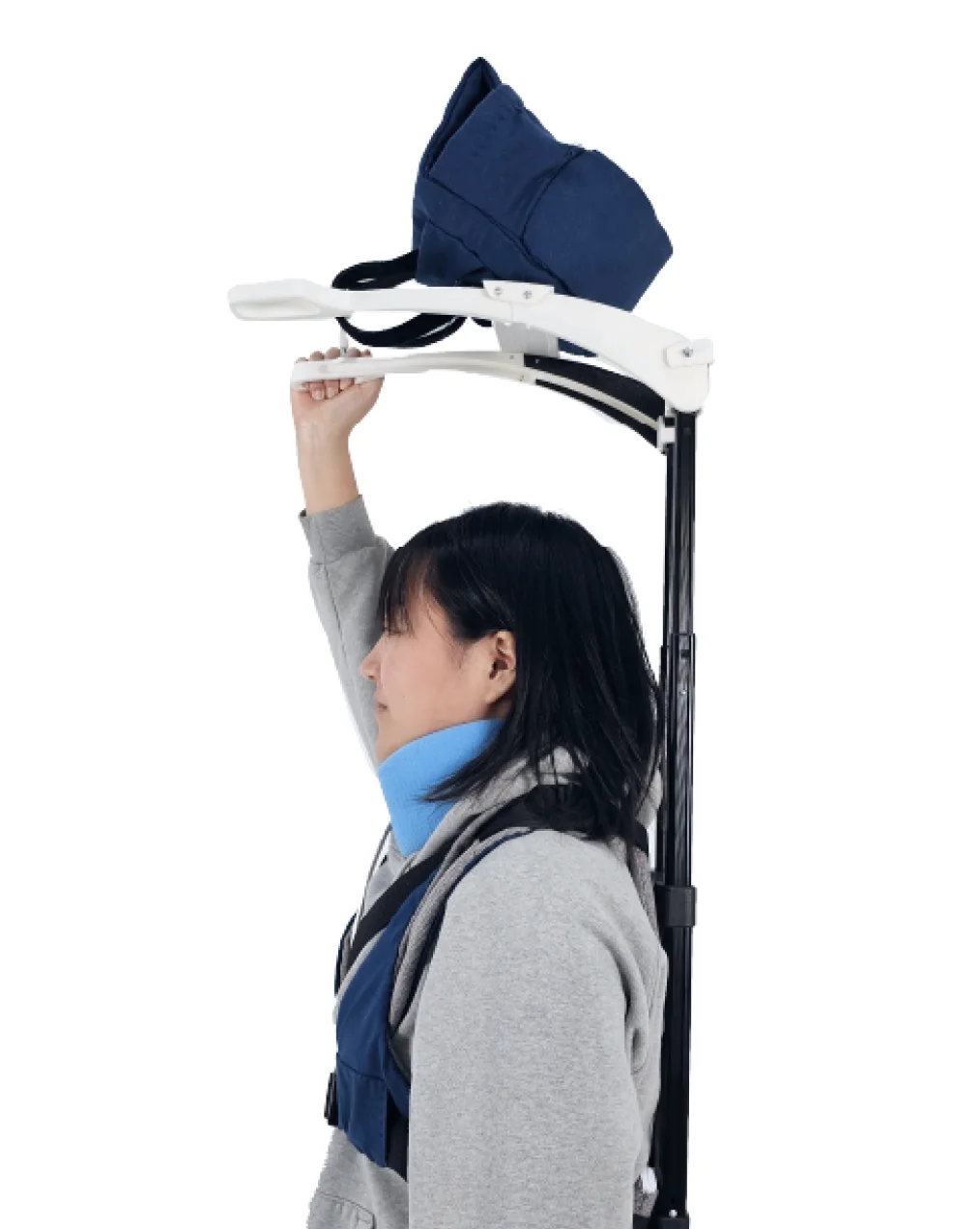
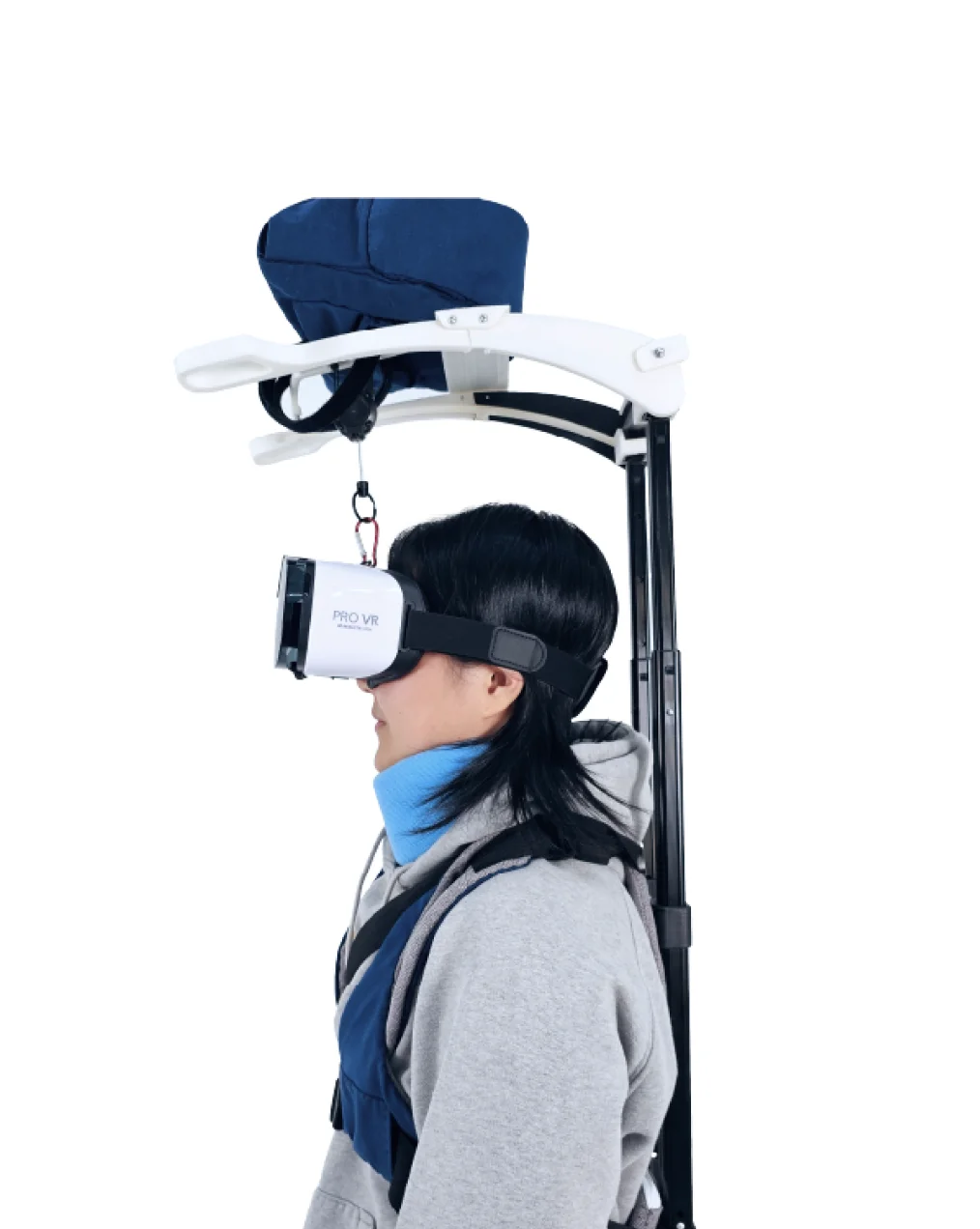
Fig. 6. User scenario
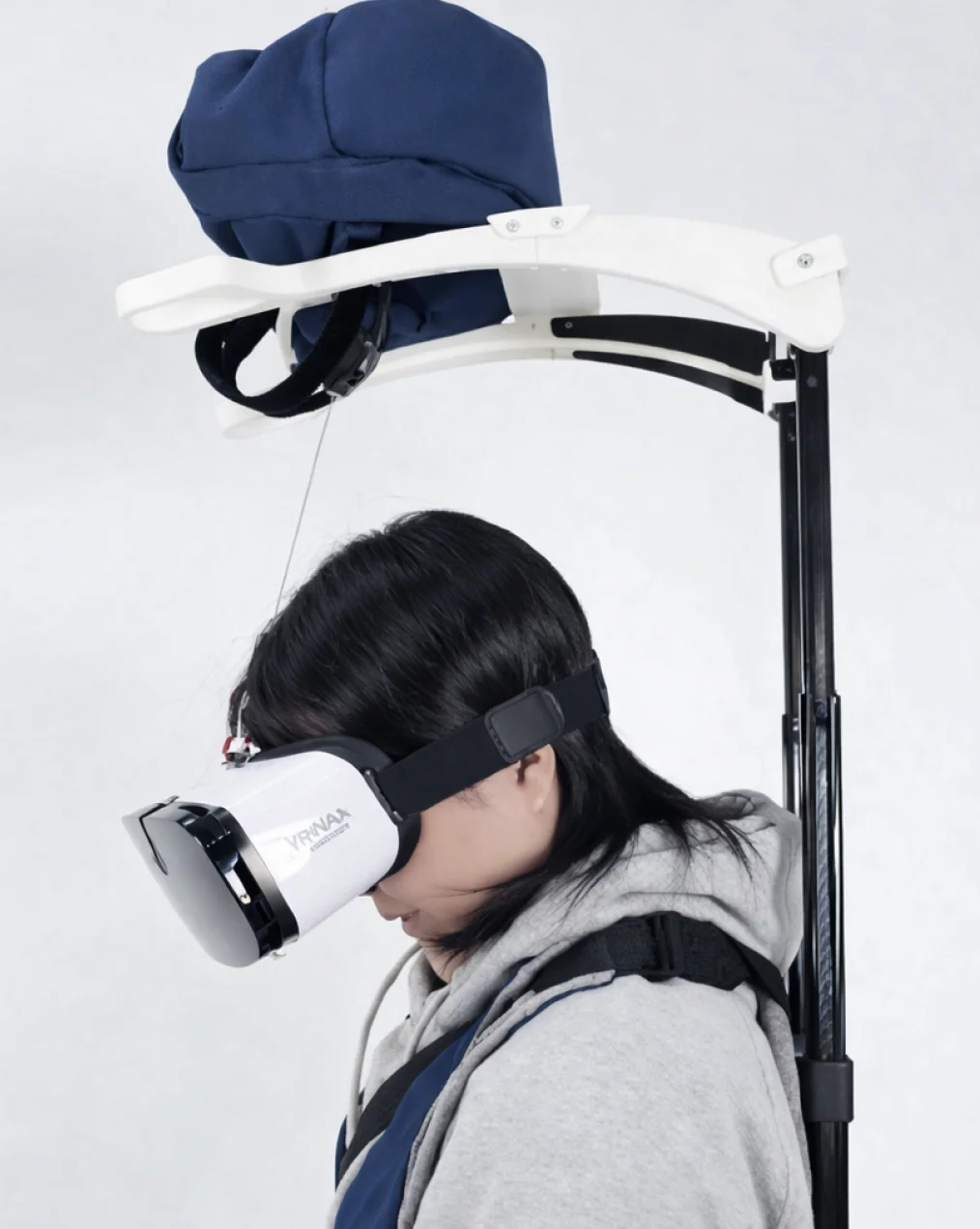
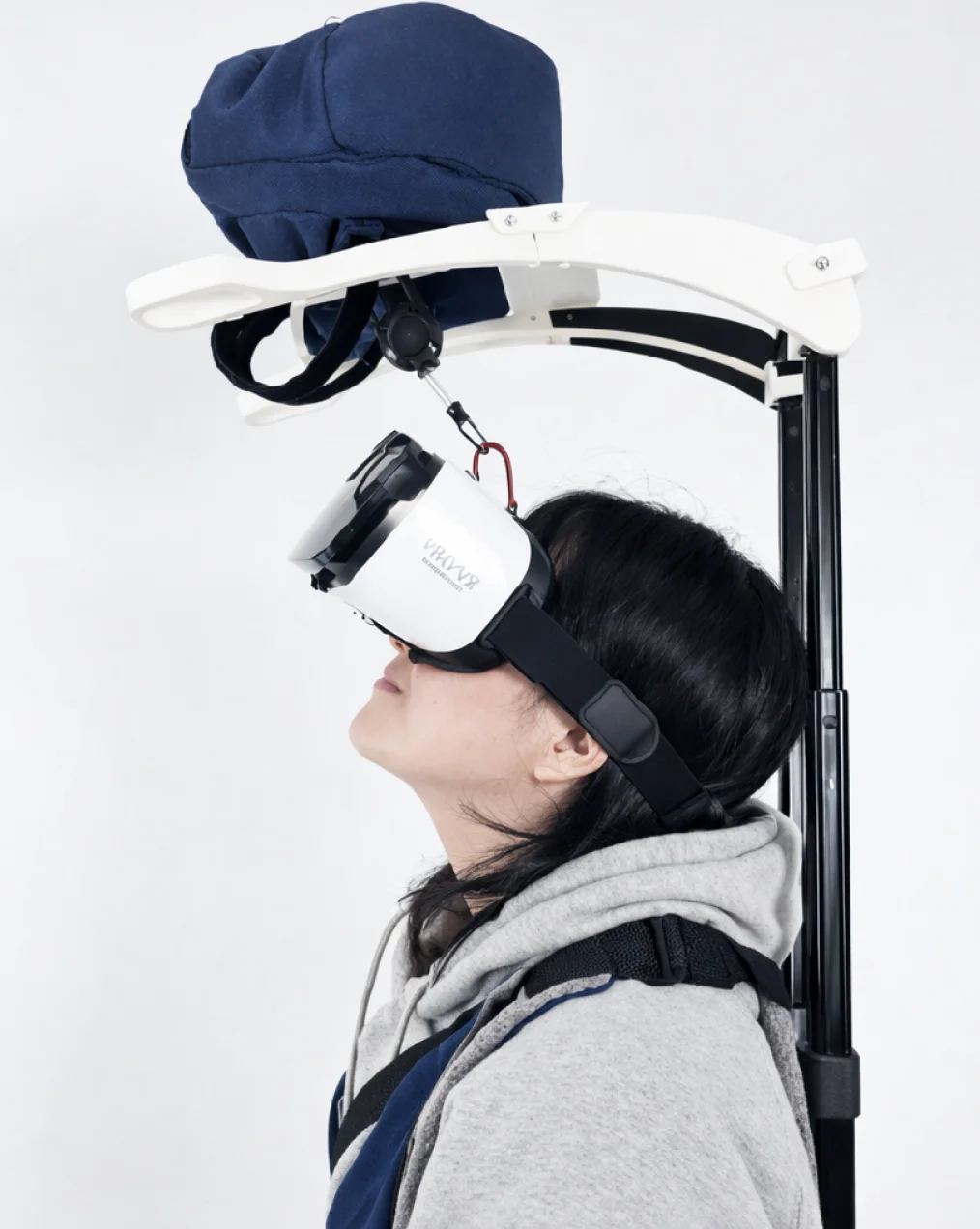
Fig. 7. Using the HMD system
Evaluation
① Usability (SUS)
- Moderate usability
- Easy to learn and use
- Some complexity remains
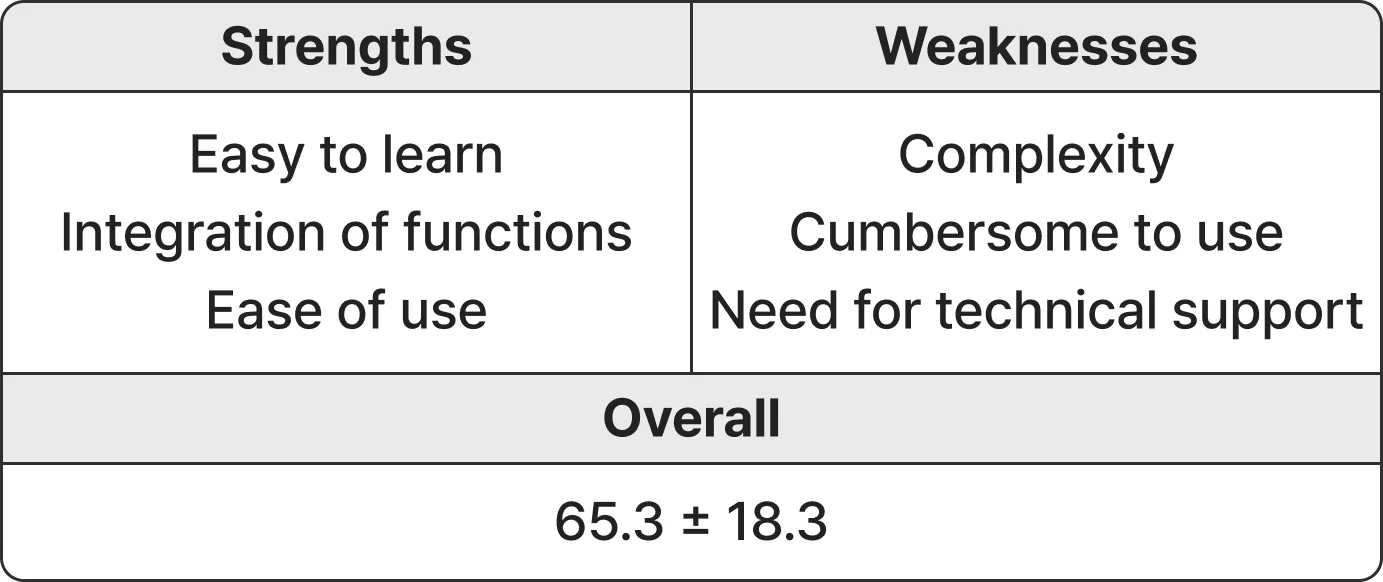
Fig. 8. SUS results
② Perceived Performance
- Reduced neck and shoulder fatigue
- Decreased perceived device weight
- Improved long-term wearability
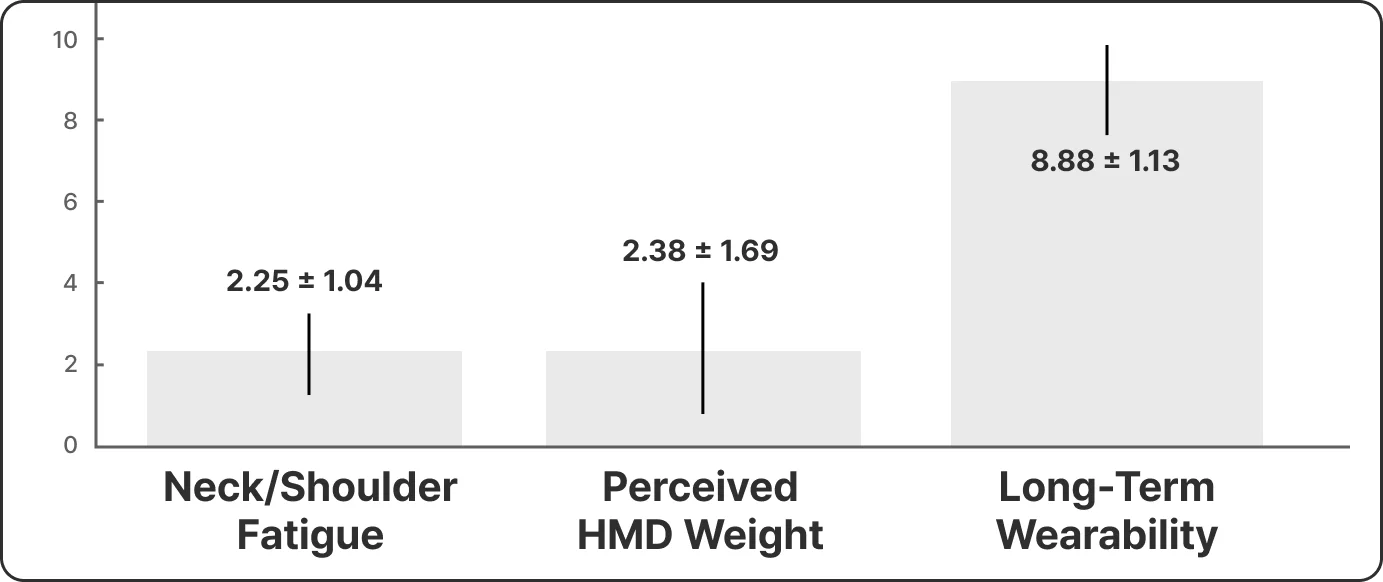
Fig. 9. Perceived performance results
" Reduced neck and shoulder fatigue and improved perceived wearability. "